What role does certified food-grade edible oil bleaching clay play in brand protection?
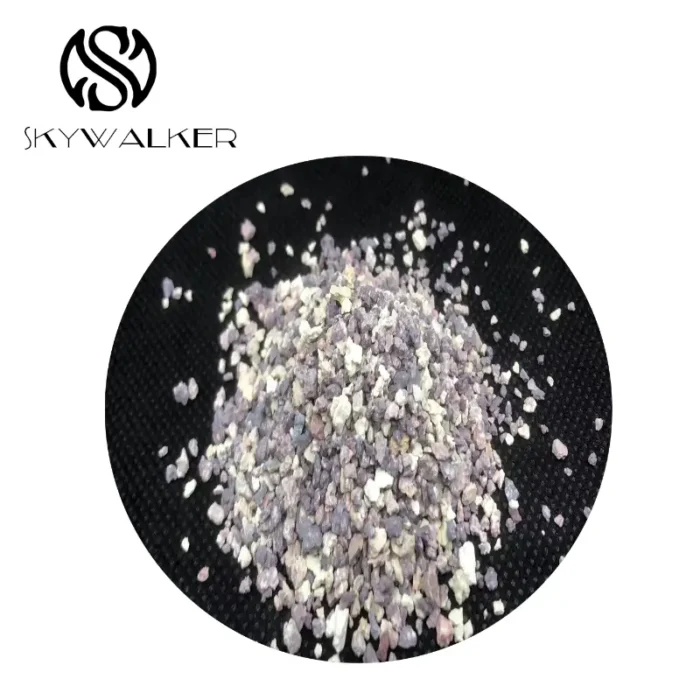
Recognizing enhanced whitening material obligates a deep inspection of its features. This unique object is commonly applied in the extraction of edible oils, effectively clearing defects. The activation process typically involves enzymatic treatment, amplifying its retaining ability to seize colored agents. Eventually, this report will examine the concepts behind refined bleaching soil and its benefits.
Whitening Material Manufacturers: Securing the Fitting Collaborator
Securing a dependable supplier of refining agent is mandatory for many segments, particularly those involved in fat refining. Finding the proper provider requires comprehensive consideration beyond just valuation. Appraise their performance in bleaching earth supply, their assurance procedures, and their capacity to consistently fulfill your volume needs. A good bleaching earth supplier will also offer technical support and a portfolio of levels to match your individual application.
Certain Process Behind Modified De-colorizing Substance
Treated bleaching earth, a cornerstone of the refining process for edible oils, functions through a fascinating amalgamation of concrete and chemical engagements. Initially, naturally occurring kaolinite is activated – a operation involving heat and reagents – to drastically increase its surface dimension. This expanded surface allows an immense number of locations for the careful adsorption of color pigments, blemishes, and adverse odor compounds. The mechanism is primarily molecular adhesion, where molecules are held by weak van der Waals attractions, though some reactive adsorption can also proceed with certain ingredients. This results by a significant decrease of color and advancement of the oil's aesthetic and scent.
Whitening Soil - Qualities and Functions
Detoxifying compound, frequently called fine clay, features unique features that equip it remarkably useful across extensive array of sectors. Its foremost attribute is its outstanding lightness, emanating from its low trace element amount. This property allows it advantageous for purposes demanding a shining appearance. Besides its color, clarifying clay: earth is frequently soft and demonstrates excellent pliancy, making possible it to be smoothly crafted. Standard roles encompass textile production, polymer improvement, biomedical compounds, dermatological articles, and as an moisture-absorbing substance in different fabrication techniques. Likewise, it finds implementation in earthenware and dye branches.
Finding the Perfect Modified De-colorizing Substance for Distinct Aims
Selecting the proper treatment element can be a challenging operation, as distinct applications involve different properties. Take into account the category of compound you’re operating on; some earth are more effective for seed oils, while alternative types are activated bleaching earth adapted towards creature fats. Factors like particle size and absorption efficiency markedly influence operation.
- Analyze the brightness and odor strength of the raw material to set the needed purification extent.
- Analyze the spread; minuscule particles generally yield augmented surface area, but may result in purification challenges.
- Fathom the wetness proportion as it determines the earth’s decolorization ability.
Whitening Substance: Fabrication Methods and Quality
The assembly of bleaching earth, a widely utilized product for oil refining and chemical purification, involves several key measures. Initially, kaolinite is quarried and then subjected to treatment via heat exposure and/or chemical conversion. This technique enhances the binding properties of the earth. Thereafter, rigorous merit reviews are implemented, featuring determinations of unit size allocation, lubricant adsorption capacity, and water content degree. Modern analytical systems, such as porosity analysis analysis and benchmark testing, are incorporated to secure a consistent substance that complies with stringent specifications.
Low-impact Sourcing of Prepared Bleaching Soil
The surging demand for activated bleaching earth presents a crucial challenge regarding its fabrication and environmental consequence. Typical sourcing methods can give rise to habitat degradation and lessening of natural resources. Consequently, an emphasis towards sustainable sourcing is indispensable. This involves adopting practices like reforestation of mined areas, repurposing waste materials from other industries for fabrication, and partnering with domestic communities to guarantee ethical and moral mining practices. Furthermore, confirmation schemes and thorough scrutiny processes are needed to corroborate that the earth is acquired in a truly ecological manner. Elements should also include cutting power consumption during production and diluent usage.
- Afforestation efforts
- Capitalizing on waste materials
- Partnering with local communities
- Accreditation schemes
Detoxifying Clay Company Database: Leading Enterprises Arranged
Locating a credible compound supplier can be a challenge, but our comprehensive catalog aims to support the process. We’ve exhaustively gathered data and listed leading enterprises in the bleaching earth business. This guide highlights prominent producers known for their caliber and guidance, allowing shoppers to find the preferred source for their distinct needs. Countless factors, including production capacity, product range, and feedback, were considered in determining these preferred ratings.
Interpreting Activated Bleaching Earth Performance Metrics
To effectively evaluate the efficiency of activated bleaching earth, it’s essential to recognize key efficiency metrics. These benchmarks often include color grade, typically measured using a analyzer, which reveals the earth’s ability to withdraw color from oils. As well, acid index is vital, as it influences the bleaching process; a higher amount usually correlates with improved decolorization capabilities. Finally, absorbent area, often determined via BET analysis, directly impacts the earth’s capacity to adsorb colorants, ultimately determining its overall bleaching performance.