What advantages does a Turbine Flow Meter offer for precise custody transfer applications?

Grasping high-frequency conveyance measurers includes comprehension of distinct critical tenets. Regularly, these contraptions exploit sonar waves to quantify the tempo of a transferring solution within a channel. Duo dominant categories exist: transit-time meters, each employing a alternative process to acquire exact stream determination. Parameters such as element properties, pipe substance, and positioning can all influence the productivity of the instrument.
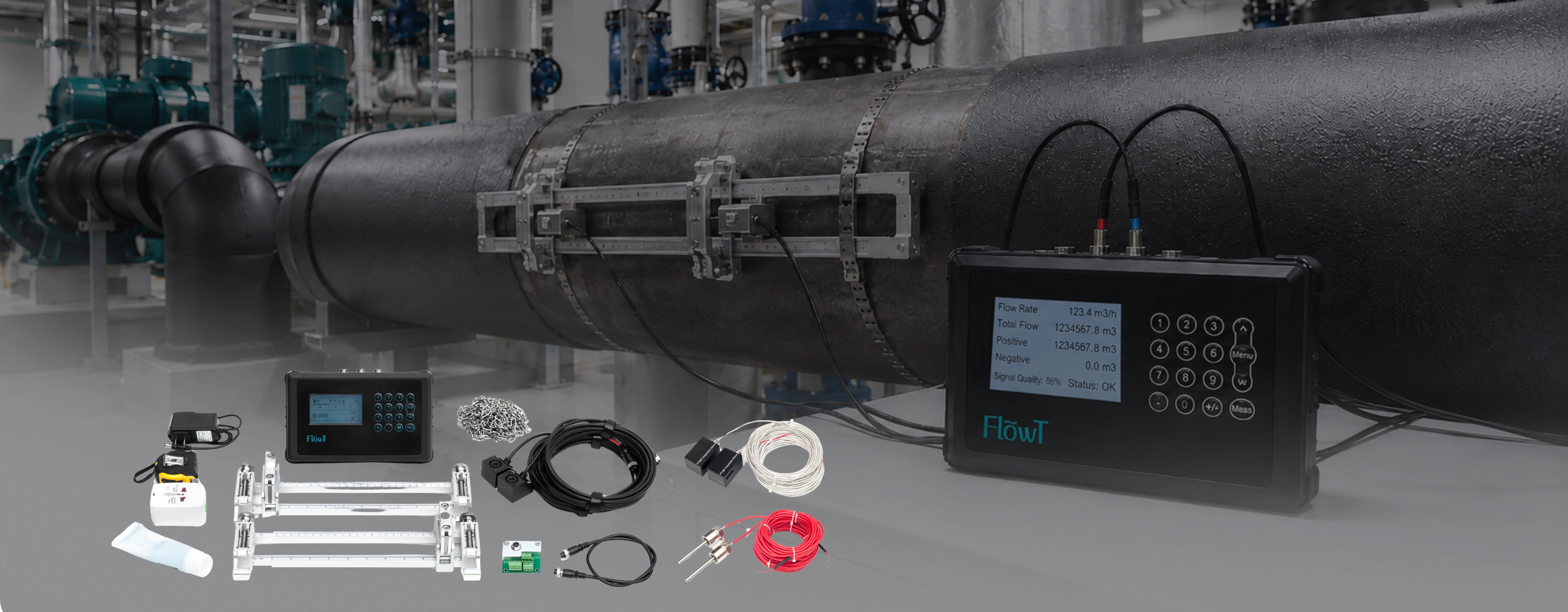
Attachable Sound Wave Flow Indicators: Strengths and Functions
Non-invasive high-frequency current devices offer a prominent edge for detecting amounts. In contrast to invasive methods, these devices are non-intrusive, entailing no incision of the system, resulting in reduced implementation costs and downtime. They’re ideally suited for a broad range of tasks including supervising water and wastewater systems, industrial processes such as chemical or pulp handling, and HVAC (heating, ventilation, and air conditioning) system performance assessment. Their ability to measure from the exterior provides malleability, allowing for retrofit solutions on existing pipelines, even those with difficult access or containing sensitive substances. Accuracy and reliability are further enhanced by their resistance to pressure fluctuations and changes in liquid properties; a key feature when dealing with variable process conditions.
Mobile Acoustic Stream Measurers for Outdoor Measurement
Movable sound movement gauges offer a practical solution for site calculation of velocity rates. These contraptions, typically battery-operated, allow technicians to quickly and safely measure conduit movements without interrupting production. Their miniature design facilitates easy haulage and arrangement in remote or difficult-to-access environments, reducing downtime and improving overall performance. The non-intrusive nature of the high-frequency technology further minimizes disruption to existing systems.
Echo Conveyance Assessment Technology Explained: Theories and Forms
Soundwave current indicators provide a unobtrusive method for quantifying the speed of mediums within hoses. The core theory relies on transmitting and receiving echo signals; variations in the tone shift, caused by the displacement, directly correlate to the fluid’s motion. Leading types commonly exist: frequency-shift and spectrum meters. Transit-time devices measure the difference in time it takes for signals to travel upstream versus downstream, while Doppler meters utilize the frequency-shift effect – where a reflected signal’s frequency changes proportionally to the fluid’s velocity. The choice between these forms depends on factors like fluid characteristics (e.g., presence of bubbles), pipe size and material, and desired accuracy level.
Finding the Right Sound Wave Current Sensor for The Process
Determining one fitting ultrasonic circulation meter for your process demands careful assessment. Numerous factors ought to be inspected, including the form of ingredient being measured, its velocity, and the existence of any process-specific problems. Besides, consider the required accuracy combined with resolution of your measurement, along with fiscal constraints.
- Source oscillation selection greatly affects trueness.
- Pipe extent determines the acceptable measurer type.
- Liquid temperature can impact transducer performance.
Enhance Efficiency: How Ultrasonic Flow Measurers Increase Checking
Registration transducer conveyance transducers deliver a considerable advancement to conventional process monitoring. These mechanisms eliminate the need for hands-on interaction with the fluid, leading to reduced repair costs and minimized stoppages. By providing precise real-time data on liquid volume or mass conveyance, ultrasonic mechanisms enable more advantageous resource control, ultimately driving operational efficiency and better process comprehension. This non-intrusive approach also preserves fluid originality which is critical in sensitive applications requiring pristine conditions for the substance being measured.
Assessing Clamp-On vs. Internal-Placement Ultrasonic Circulation Sensors
Selecting each wave-based liquid meter for an individual task involves thorough inspection. Clip-on transducers offer comfort of mounting, as they demand no break to original conduit. However, those units are often confined by pipe texture and can be more prone to adjacent static, potentially influencing validity. Alternatively, internal detectors are permanently fixed into the flow conduit, generally delivering elevated consistency and being less receptive to nearby agents, but needing definite cessation for construction.Diagnosing Regular Problems with High-Frequency Flow Instruments
Ultrasound flow gauge networks can face various complications, often stemming from configuration errors, fluid characteristics, or equipment problems. Common errors include signal reduction caused by air pockets, excessive scaling, or changes in fluid density. Verify the transducer’s coupling to the pipe – poor contact can bring about inaccurate readings. Signal unwanted sound, frequently from electrical equipment nearby, may require shielding or filtering. Incorrect Vortex Flow Meter transit time measurements, often due to improper beam alignment or bubble formation, should be fixed. Periodic calibration and authentication are crucial; deviation from baseline readings signals potential hardware degradation or fluid property changes. For accurate flow data, regularly inspect the system and resolve any anomalies promptly.
- Assess transducer coupling
- Audition signal strength
- Examine calibration records