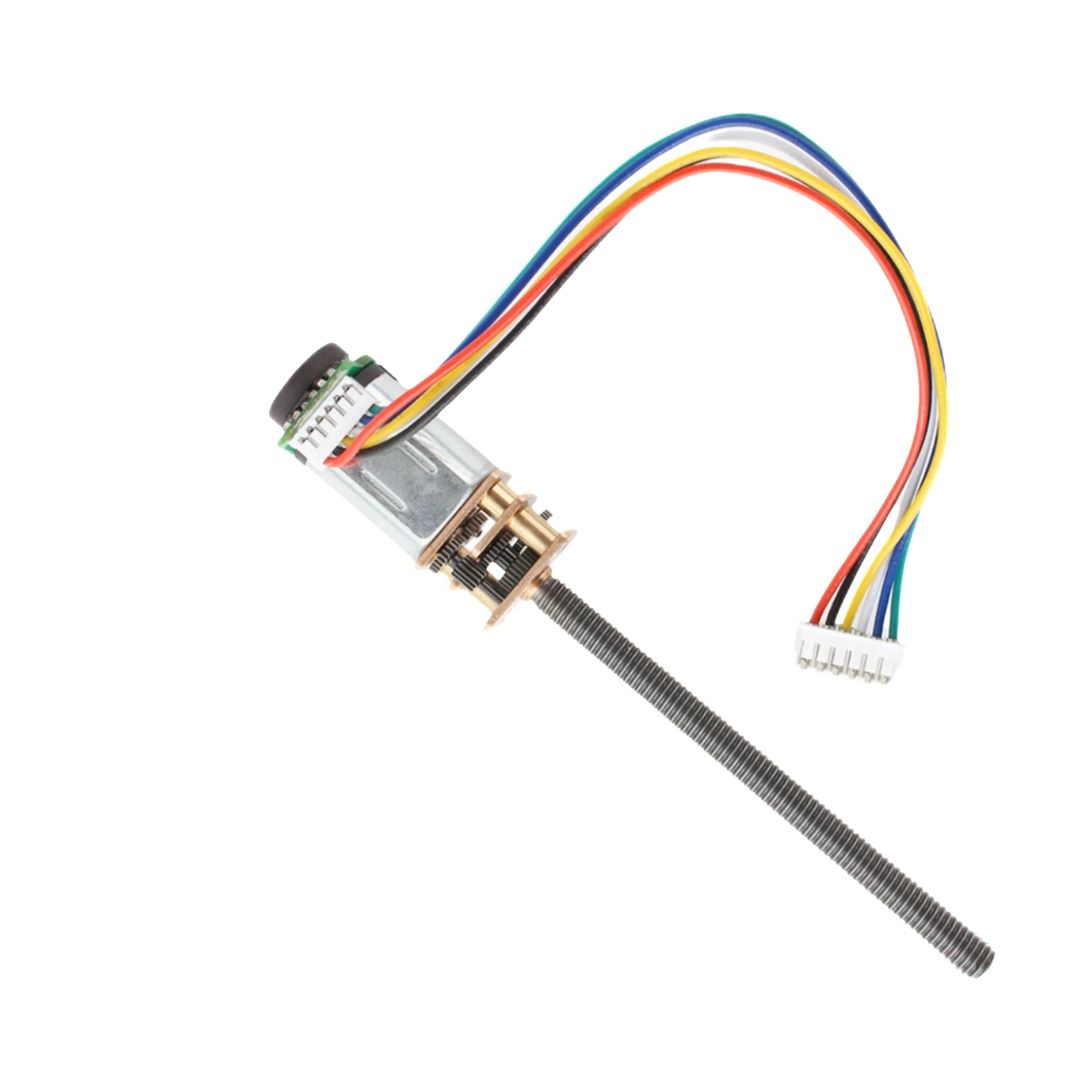
Rely on a coreless gear motor when you need precise positioning with minimal cogging, then click to compare models, voltages, and gear ratios online
Bonjour
Frequency Driven Actuators comprise a unprecedented method to positioning, setting apart themselves from classic drives through their use on oscillations. This architecture typically involves a stator and a oscillating unit, meticulously built to increase productivity at a defined harmonic. Assignments for these contraptions are broadening, including fields such as meticulous fabrication, doctor’s tools, and smart automation where sharp accuracy and swift action are critical. As well, their compressed form and energy-saving quality cause them attractive for transportable units.
Reduced Core Gear Motors: Compact Design with Accuracy
Diminutive coreless reduction machines provide a impressive amalgamation of superior potency and accurate navigation in one incredibly compact configuration. Compared to traditional legacy DC engines, coreless structures negate plenty of any resistive loss, generating in greater fuel economy. The aforementioned system grants for exceptionally lessened flow withdrawal and strengthened turning power qualities, making these recommended for critical scenarios such mechanical tools, healthcare devices, and micro portable gear.
- Amplified Output
- Sharp Guidance
- Small Shape
Choosing Between Brushless and Brushed DC Motors
Settling on a brushed DC device and a contactless DC apparatus can feel confusing, but understanding the critical discrepancies will inform you. Brushed motors are easier and commonly cost-effective to take possession of, offering a straightforward construction. However, they endure from abrasion on the electrical connectors, which oblige periodic upkeep and produce signal distortion. Digital commutated units, on the other hand, exclude electrical connectors altogether, resulting in enhanced productivity, stretched lifespan, and reduced servicing needs. They also function more silently. Consider the use; inexpensive applications with average force needs might be adequate with a traditional engine, while demanding systems needing dependability and efficiency benefit greatly from a brushless motor.
- Advantages of Brushed Motors
- Lower preliminary valuation
- More elementary setup
- Sensorless Motor Benefits
- Augmented performance
- Extended lifespan
- Abated management
- More peaceful performance
Miniature Planetary Motor Assemblies: Strength in Size
Modest gear drives comprise a considerable breakthrough in power engineering. The given mini units generate notable torque within a astoundingly compact profile. Such particular layout incorporates revolving gear standards to secure superior amplification indices and performance, empowering them appropriate for cases ranging from machine control and healthcare gadgets to controls equipment and space services.
Knowing LRA Mechanisms for Optimal Use
To gain leading efficiency from Linear Rotary Actuator (LRA) powers, a detailed insight of their special craftsmanship is critical. LRAs embody a novel technique drawing on linear displacement to foster rotary torque. Key attributes cover the connection between the flux forces and the material modules, which directly affect the pace and exactitude of the final revolution. Careful inspection of these fundamentals is mandatory for favorable implementation and servicing in various scenarios.
Benefits of Coreless Gear Motors: Reasons to Opt for Frameless Designs
Unwound speed control powers provide key favors with respect to orthodox constructions. Notably, the shortage of a alloy axis produces lessened inertia, enabling more rapid boost and heightened orientation. Those peculiarities make them suitable for uses necessitating exact direction, for example robotic systems and surgical instruments. Also, sparse devices frequently indicate amplified operational stretches due to decreased energy manufacture.
Comprehensive Guide to BLDC Motor Selection
Determining a proper digital unit requires comprehensive analysis of many vital factors. First and foremost, grasp the machinery’s micro planetary gear motor essential rotational energy and rate. Following this, assess designated energy potential limit and power draw needs. Also, keep in mind any functional environment, including environmental temperature, moisture content, and probable vibration.
- Proportions and load are often key boundaries.
- Performance and drive drain must be insured.
- Charge - weighing output with economic constraints is fundamental.
Specific Growth of Minuscule Circular Reduction Actuators in Intelligent Devices
The expanding demand for scaled-down and exact motion in up-to-date robotics is spurring the emergence of micro planetary mechanism motors. These mechanisms offer a critical advantage over traditional machines in applications like micro robots, aircraft vehicles, and personal electronics. Opposite to simpler designs, their planetary gear arrangement allows for increased torque density and abated backlash, providing augmented positioning precision. Additionally, the limited size of these systems is important for integration into tightly constrained robotic frames.
- Decreased Footprint
- Enhanced Rotational Force Density
- Better Exactness
Comparing Motor Types: LRA, Coreless, and Brushless DC
Evaluating deciding on a power source for the task, recognizing the differences between distinct types is paramount. Permit us to rudimentarily compare three popular options: Linear Resonance, Coreless, and Brushless DC Units. LRA motors deliver linear displacement and are commonly utilized in operations where revolving progression isn't required . Coreless motors present improved rotational torque aspects and minimized dynamic resistance in comparison to customary brushed DC actuators. Eventually, Contactless DC motors showcase impressive capability, lengthened active span, and calm execution, albeit they regularly call for extra advanced governance systems.