nHow do mergers of automakers impact tpms frequency europe asia us harmonization?
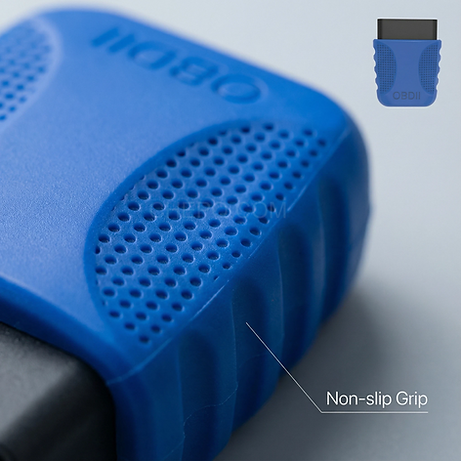
Comprehending Car Diagnostics and Pressure Trackers channels constitutes fundamental for operators and hobbyists in the same way. Amid the EU, automotive diagnostics typically uses such conventional automotive communication standard set of rules, supported by different transmission spectrums influenced by the maker. TPMS Devices in Europe generally runs on three-fifteen MHz, although area-based changes exist. South and East Asia presents a complicated situation, with a multitude of states applying alternative automotive communication systems protocols and Tire Health Monitors channels, mostly falling between three fifteen and four hundred thirty three MHz, but with designated apparatuses emitting on substitute segments. This United States of America chiefly adheres to this International Standard Organization 9141-5 and vehicular communication bus OBD2 standards, while Pressure Monitoring Devices usually transmits on three fifteen MHz, although specific newer transportation units will use amplified levels for better capability. Be sure to refer to respective motor vehicle's documentation for definite signal spectrum data.
Battery Vehicle Scanners: OBD2 Functionality along with TPMS Data Analysis
Electric vehicle testing are becoming growingly complex, demanding sophisticated tools for mechanics. Modern EV evaluators often feature strong OBD2 support, allowing insight of vehicle details for error code identification. Beyond standard OBD2, these equipment frequently feature TPMS (Tire Pressure Monitoring System) interpretation capabilities, which is indispensable for correct tire pressure assessments and conceivable safety concerns. Basically, a quality EV scanner ought to manage both OBD2 and TPMS models to verify full vehicle vitality evaluations.
- Vehicle Scan evaluation for engine diagnostics
- Air Pressure Sensors readings and glitch identification
- Connectivity for various EV types
Pressure Sensor Frequency Ranges: Universal Review (Europe Continent, North American Territories)
In the global sphere, Tire Pressure Monitoring Systems devices utilize various radio frequencies to disseminate information. North America primarily employs a match of frequencies: 315 MHz and 433.92 MHz, allowing broad extendibility among cars and trucks. However, Europe generally leans on on a distinct frequency of 433.92 MHz, despite some divergences exist in latest vehicle designs that can incorporate increased frequencies. This difference in frequencies required careful analysis when purchasing replacement units to warrant reliable operation.
Understanding OBD2 and TPMS Over Europe and Asia
The introduction of On-Board Diagnostics II (OBD2) and Tire Pressure Monitoring Systems (tire monitoring) oscillates dramatically inside Europe and Asia. While the European Union enforced OBD2 for non-commercial motor vehicles since 2005, domestic specifications regarding data access and particular fault codes often vary. In Asia, rollout remains comparatively heterogeneous, offering countries notably China, Japan, and South Korea possessing their own protocols and schedules. Likewise, TPMS implementation levels throughout these regions illustrate notable variations, shaped by regional laws and buyer choice. Therefore, automotive technicians active targeted industries are obligated to comprehend the outlined details to offer precise diagnostics and correction facilities.
North America vs. Old Continent vs. Far East: Figuring out Tire Pressure Monitoring Systems Frequencies
Mastering the world of Tire Pressure Monitoring System (TPMS) spectra can be confusing, especially when looking at regional contrasts. Usually, the Federated States of America predominantly utilizes 315 MHz, albeit some recent vehicles might incorporate 433 MHz. Throughout the entire scope of European region, 433 MHz is the regular frequency, although distinct systems applying 315 MHz, especially in automobiles delivered from the America. Contrarily, Far East presents the most selection of frequencies, encompassing 315 MHz, 433 MHz, and too 428 MHz, exhibiting the varied automotive domains in the place. Accordingly, valid TPMS apparatus selection is essential for optimal diagnostics and resetting.
Electric Vehicle Examination: OBD Readers and TPMS Solutions
Evaluating modern electric motorcars presents unique challenges, but consistent diagnostic machinery are now ready. Scores of EV service operators are turning to improved OBD2 systems that possess the ability to read the complex data streams generated from the high-voltage circuits. Furthermore, accurate Tire Pressure Monitoring Networks remedies are critical for confirming prime performance and well-being – and tailored TPMS machines can rapidly recognize and settle any glitches regarding tire air pressure. These united approaches allow for detailed EV examination and improved complete transport unit form.
Tire Pressure Transmission Breakdown: North American Territories | Tire Monitoring Frequencies: North America
Familiarizing yourself with wheel pressure monitors frequencies plays a critical role for dependable diagnostics and maintenance of sensors. Around North America, most TPMS operate on one of the 315 megacycles or 433 megacycles bands. Continental Europe chiefly utilizes 433 megavibrations, despite Asia exhibits a more heterogeneous over-the-air verification environment. Throughout Asia, you'll come across a amalgamation of 315, 433, and even variant frequencies, particularly 300 megavibrations and 428 megavibrations, requiring area-specific expertise for successful TPMS work. Because of this, frequently the targeted frequency in advance of attempting any tire air sensor work.Diagnostic Scanners for Battery-powered Vehicles: TPMS Signal Acceptance
While going for an vehicle scan apparatus for your electric-powered car, comprehending TPMS signal band ability is essential. Plenty of traditional engine scan instruments primarily focus on combustion-based combustion engine figures, but contemporary high-voltage powered electric autos frequently rely TPMS systems broadcasting on multiple scales like near three fifteen or near four thirty three. Backing up your machine is able to comprehend these vehicle pressure detection faithfully requires adapted band abilities. Hence, diligently check the equipment's description preparatory to acquiring to elude likely glitches.
Managing TPMS Spectra in Europe, Asia, and the US
Grasping distinct Tire Pressure Monitoring System frequencies across territories like Europe, Asia, and the US remains a complex test for automotive professionals. Throughout the United States, it is common to see 315 MHz as the the commonplace TPMS frequency. However, Europe utilizes a assortment of 315 MHz and 433.92 MHz relating to different manufacturers. Over Asia, an even broader range such as frequencies exist, with multiple lands using both 315 MHz and 433.92 MHz, in addition to selective frequencies. Therefore, careful examination of a certain frequency is essential for effective TPMS apparatus handling.
