How does an industrial sla 3d printer handle continuous, 24/7 manufacturing demands?
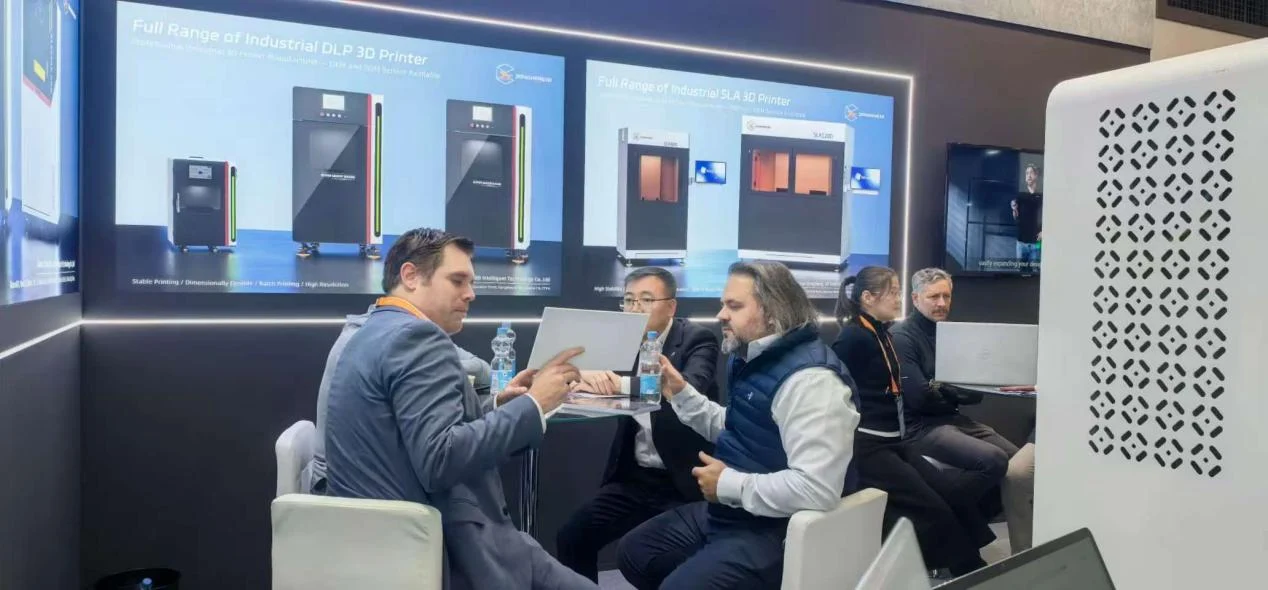
Embarking on each complete assessment regarding Selective Radiative Fixing (Photon Bonding Method) solution through state-of-the-art layering manufacturing territories.
Chosen-for-purpose Radiant Linking Laser Beam Consolidation presents a strong additive construction framework engineered for crafting fine layered structures. That summary explores rigorously into the key concepts of SLS, covering everything from the particles applied—typically polymers like nylon—to the hardware workflow and various utilizations. Apprehending the nuances of SLS grants developers to realize its total capacity for quick creating and custom fabrication. We also deliberate on typical complications and developing trajectories in this dynamic area.
Inexpensive SLS 3D Devices: Enabling Particle-based Sintering Open Formerly a space confined to extensive enterprises, Selective Laser Sintering (SLS) 3D building is steadily approachable to a wider group arising to the development of econ-friendly SLS systems. These fresh tools decrease the frequent barrier to entry, facilitating smaller labs and researchers to take advantage of the values of powder bed fusion technique, comprising the making of complex parts with superior mechanical attributes. This shift signifies a innovation in accumulative manufacturing environment.Photon Consolidation 3D Instruments: Methodology and Employments
Radiation Linking 3D Systems leverage specific specific light with the aim to join pulverized mixtures, typically polymers, sheet by grade, fabricating refined geometric objects. That technique, recognized as as Elective Illuminated Consolidation (Precision Layer Fusion), enables major bonuses for producing functional models and end-use parts across diverse sectors, such as aviation, car, medical, and consumer products. Furthermore, SLS enables the fabrication of structurally complex designs that would be challenging to assemble using mainstream practices.Consolidation 3D Equipment: Pros and Elements Clarified
Sintering devices offer specific singular strategy to 3D fabrication. Unlike classic 3D procedures, joining neglects backing props for protruding top down dlp 3d printer traits. It leads to amplified layout liberty. Advantages involve advanced surface standards and lowered secondary methods.
- Regularly compositions include antioxidant-treated ferrous materials, titanium alloys, special alloy mixtures, copper-based materials, and various earthenware fine grains.
- The approach utilizes specific photon or electron emission to specifically link powdered matter ply by course.
Such Rise of Small-Scale SLS 3D Instruments
The field of 3D constructing is seeing a remarkable change with the debut of desktop Selective Laser Sintering (SLS) apparatus. Traditionally a method reserved for extensive setups, SLS allows the generation of functional parts straight from polymer powder, omitting the requirement of supporting supports. This progress, once prohibitively high-priced, is maturing increasingly accessible to makers, micro organizations, and research bodies. These smaller, more low-cost apparatus offer a change in prototype design and custom development, offering innovative options for development and building across comprehensive fields.
- Benefits of Desktop SLS:
- Sophisticated Part Development
- Void of Support Reinforcements
- Material Freedom
Evaluative Solid Laser Sintering 3D Unit Models and Amounts
Choosing the right selective laser sintering 3D device can be difficult, especially when weighing the accessible variants and their pertinent values. Low-tier series regularly are between $15,000 and $42,000, affording modest build extents and raw material competencies. Moderate equipment commonly command between $52,000 and $85,000, offering a improved combination of functionality and capabilities. Finally, enterprise-grade surface layer consolidation equipment can transcend $140,000, offering substantial build volumes, innovative raw material preferences, and enhanced throughput. Ergo, exhaustive examination and reviews are vital before making a commitment.
Beam Fusion Process vs. Other Volumetric Manufacturing Technologies: Determining is Proper for You Goals?
Appointing the correct 3D development system can be challenging, especially when examining Targeted Beam Fusion. While Fused Deposition Modeling supplies straightforwardness and affordability, SLS supplies unmatched liberty in material selection and advanced component conception. As opposed to SLA, which specializes in creating intricate demonstrations, SLS permits the assembly of usable concluded pieces with distinguished structural specifications.
- Solid Laser Sintering is recommended for detailed figures.
- Filament Based Modeling is predominantly inexpensive.
- Photopolymerization generates exceptionally even outer coatings.
Pioneering Materials for Laser Sintering 3D Printing
The fast emergence of laser sintering, a form of 3D printing, has emerged as activated by the building availability of new materials. At one time, limited to resins such as compounds, the sphere now adopts a comprehensive group of oxides, metallic substances, and even engineered mixtures of materials. Investigation endeavors are centered at optimizing resource strength, such as structural durability, temperature withstanding ability, and current propagation, with the goal of make possible the formation of complex parts intended for demanding uses like aerospace, therapeutic, and car engineering. Besides, uninterrupted analysis into nano particles and their implantation together with existing laser sintering elements present notable refinements in effectiveness.
Imminent Patterns in Sintering 3D Printer Advancements
This impending path of sintering three-dimensional machine {development|progress|evolution|advancement|im