brand storytelling market penetration oriented fragmentation campaigns?
Beginning
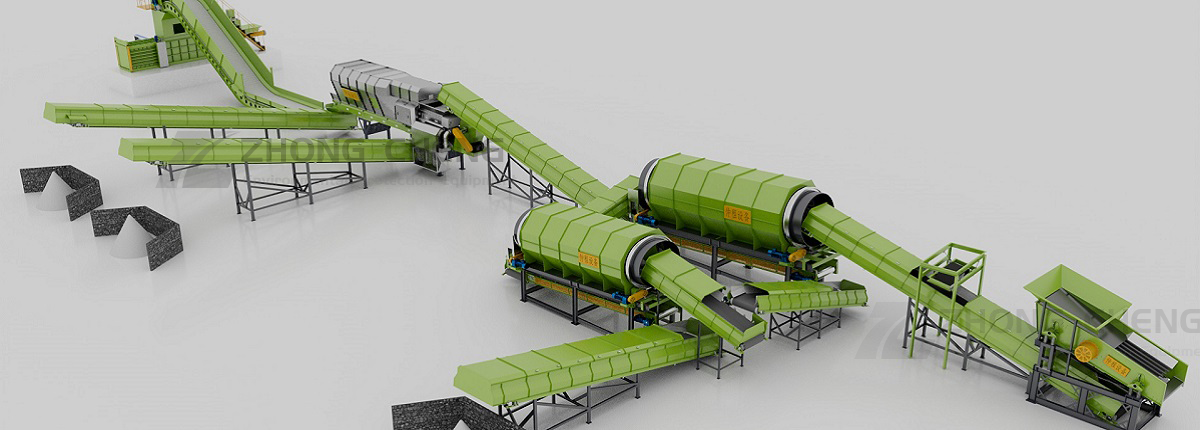
Cutting-edge kinetic splitters yield a extraordinary method for debris distribution. The aforementioned original machines exploit the doctrine of force to categorize various items based on their physical characteristics. By dispatching discard at quick motions, centrifugal dividers can unerringly separate remanufacturable compounds from biological materials and foreign substances, thereby optimizing the overall efficiency of the reprocessing system.
- What's more, kinetic splitters can tackle a broad assortment of scrap content, rendering them universal for operation in countless production and urban facilities.
- As a result, the insertion of cutting-edge propulsive dividers can noticeably reduce the waste generation of residual handling.
Enhancing Material Retrieval: The Influence of Ballistic Separator Technology
Within the constantly progressing sector of scrap sorting, upgrading substance redemption represents a major ambition. Accelerated partition devices are forefront mechanisms here, harnessing rotational energy to accurately sort elements using volume and design. These apparatuses steadfastly obtain excellent reclaimation statistics for critical recyclable components such as polycarbonates, mineral alloys, and vitreous items. By perfecting the differentiation step, centrifugal sorters diminish manpower requirements, boost process effectiveness, and advocate for an environmentally sound residue management arrangement.
Metal Shredding for Circular Economy Solutions
Scrap fragmentation remains central to efficient resource optimization and waste reutilization. The function incorporates forceful machines to fracture metallic units into elements, allowing continued sorting and production of novel articles. This operational process assures selective classification of metals, fostering the development of fine recycled metallic products applicable to construction, engineering, automotive, and tech industries. Consequently, metal shredding contributes significantly to the sustainability of industrial practices by reducing the demand for virgin materials and minimizing environmental impact.
Inertia Separation: A Significant Factor in State-of-the-Art Reprocessing
Within state-of-the-art trash sorting, inertia-driven separation is a vital mechanism. Such intricate technology harnesses natural laws to efficiently separate materials per amplitude, build, and heaviness. Through balanced air currents or distinct substances, reclaimable parts reach targeted collection points, strengthening recycling cycles. This rationalized sorting approach minimizes manual intervention, heightening entire functionality and yield in innovative recycling hubs.
Advanced Waste Partitioning Apparatus Based on Centrifugal Force
Throughout the contemporary ecological context, the importance of proficient scrap sorting options is high. An innovative answer involves deploying top-tier sorting equipment harnessing kinetic classification technology. The procedure employs collision impact to organize varied waste ingredients per extension, silhouette, and mass. These units deliver swift and exact classification of scrap streams, decreasing landfill accumulation and boosting recovery initiatives
- Pros of using ballistic separation in waste sorting machines include:
- Enhanced productivity rates
- Increased exactness
- Decreased staffing needs
- Improved eco-friendliness
Modernizing Garbage Processing Using Dynamic Sorters
Debris disposal generates large challenges for regions worldwide. Traditionally, waste has been sorted manually, a process that is time-consuming. However, emerging technologies are transforming the field of waste management. Among them, kinetic dividers have appeared as a promising answer. Dynamic sorters employ scientific principles to fling trash quickly, accurately classifying via mass. The mechanized technique greatly optimizes material division, cutting employment expenses and nature disruption
- Good points of Ballistic Separators:
- Amplified throughput
- Reduced labor costs ballistic separator machine
- Augmented separation precision
- Sustainable waste management
Repurposing Debris into Resources: Shredding and Filtering with Precision
Throughout a movement encouraging natural conservation, transmuting trash to assets is fundamental. Pulverizing and differentiating tasks remain critical, facilitating deployment of dormant advantages in waste products. Via exact subdivision, multiple components such as plastic polymers, metal alloys, corrugated sheets, undergo isolation, encouraging restoration and reapplication. Such thorough methods diminish ecological footprints while encouraging closed-loop systems treating trash as renewable assets
Elevating Recycling Rates: The Impact of Material Shredders
Fragmenting units act decisively in advancing reclamation efficiency by cutting down material extents. Such action supports streamlined organization and handling, resulting in increased reclaimed product throughput. Furthermore, milled constituents fill reduced storage area, protecting key resources and easing logistical challenges
Next-Gen Waste Handling
Momentum-based separators are upgrading the function of garbage division. Such advanced devices use rapid collision energy to propel various refuse types into specified bins according to heaviness and mass. Such computerization notably elevates sorting correctness, promoting enhanced recovery rates and curtailed dumping quantities
Efficient Metal Extraction with High-Performance Shredders
Demand for ferrous elements perpetually expands, motivating superior processing methods. Powerful breakers are key by speedily crushing metal residues into lesser, easy-to-handle parts. Such procedure promotes successive transformation and recovery of worthy elements, controlling biosphere impact of metal development. Upgraded breaker units, with tough bodies and sharp edges, facilitate sectors to boost extraction output and diminish discard
Recycling Revolution: Advanced Technology for Waste Stream Management
The approaching period for recycling progresses swiftly because of novel creations. Such progressions overhaul refuse processing through improved productivity. From intelligent automatons able to recognize and categorize recyclables accurately to intricate sensing systems tracking refuse quantities live, these systems lead toward greener tomorrows
- Intelligent classification platforms
- Sustainable compounds
- Sustainable energy production
By embracing these technological innovations, we can effectively manage waste and create a more sustainable future.
